
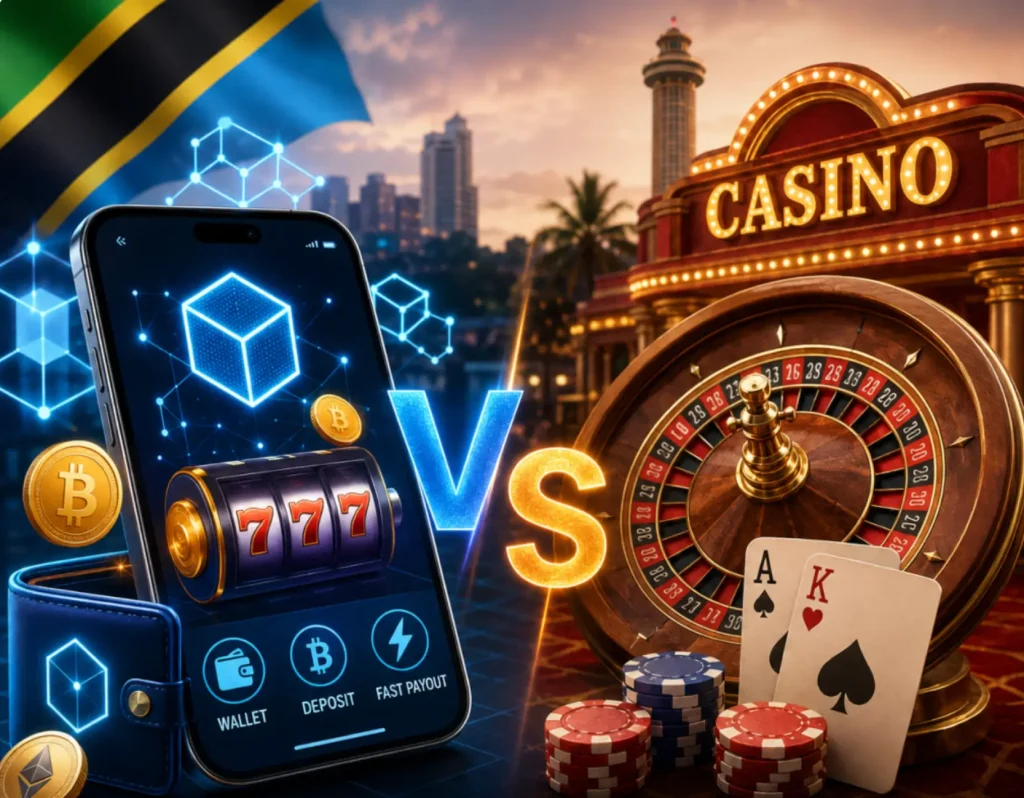

The online casino sector is evolving quicker than most of the traditional casinos anticipated. It is not so long ago because blockchain platforms had been thought of as niche merchandise primarily for cryptocurrency fans. Nowadays, they are on the same level with well-known international brands and even reach younger digital people.
This shift was particularly noticeable in Tanzania, where the use of smartphones, mobile payments and understanding of crypto have all grown at the same time. Today’s gamers demand immediate access, quick withdrawals, hassle free interactions and versatile payment options. Blockchain casinos perfectly align with those expectations.
As users navigate the world of Haraka bet casino, it’s clear that crypto gaming is part of a much larger trend in the digital entertainment industry. No longer is the game’s variety or bonuses the only concern of players. They are more concerned about transaction speed, privacy, access and platform flexibility.
The casino licensing reputation, existing partnership and well-known casino identity are the reasons why traditional casino brands continue to hold strong positions in the market. However, the decentralized gaming market keeps growing, as it better suits the current behavior of the web.
It’s not just a matter of technology. It’s also cultural.
Younger generations in-app savvy, used to livestreaming, digital wallets and global online communities are more at ease with blockchain-based platforms than with traditional banking-related ones.
What makes blockchain casinos different
Blockchain casinos utilize the blockchain to enable players to place bets without accessing a banking system. Deposits and withdrawals and in some cases even the internal mechanics of the games are linked to the decentralized digital networks.
This affects the overall user experience a lot.
Traditional online casinos typically rely on bank cards, verification protocols and payment gateways that can lead to payment delays and geographic limitations. A blockchain platform can help eliminate that friction by enabling direct transfers from wallets.
Convenience is the primary draw-in for many users.
You can get into a crypto wallet without having to engage with the banking system as much as with the previous systems. This is particularly important in areas where using foreign payment methods can seem unreliable or restrictive.
There are certain features that are typical of blockchain casinos and that differentiate them from the traditional casino brands:
- cryptocurrency deposits,
- faster withdrawals,
- wallet-based access,
- increased transaction transparency,
- lower reliance on banks,
- broader international accessibility.
Some platforms also include provably fair systems. These mechanisms enable some games to be ensured mathematically, using blockchain records, and not just through the operator’s trust.
The concept resonates with audiences that are tech-savvy and appreciate transparency and technical independence.
Why younger audiences prefer crypto-powered platforms
The 10 years have seen a complete transformation of digital behavior. Younger Internet users are accustomed to a world in which apps, livestreams, digital creators, and real-time interactions all play a major role.
The conventional online casinos tend to be slower in comparison.
Users who are used to the fast and instant services of the internet may feel outdated by the need to undergo verification procedures, delayed withdrawals, and rigid banking structures. One of the reasons blockchain casinos benefit in the spotlight is that they are more similar to the rest of the internet culture.
The perception was also heavily influenced by crypto communities.
The Bitcoin, stablecoins, and decentralized finance were linked to technological independence and Digital freedom inside the web culture. Before making any assessment of the quality of the games, many users feel blockchain platforms are more modern.
This is a psychological picture.
Youth in Tanzania are more engaged in entertainment in Telegram groups, TikTok clips, YouTube streams and app-based ecosystems. This is where cryptocurrency talk merged with many of these online environments.
The overlap naturally facilitates blockchain games development.
There is another factor: speed.
The speed of deposits and withdrawals significantly impacts on user satisfaction. Modern players will expect transactions to be processed in similar ways as messaging apps or mobile wallet systems. A few days waiting for withdrawals seems like a relic of the past in today’s digital age.
Some of those delays are greatly cut down with crypto infrastructure.
Why transaction speed became a major advantage
Many operators did not realize that the slower the transaction the more it affected the trust.
With many traditional casino platforms, funds have to pass through a number of financial gateways before reaching the player. The process can be delayed by various factors such as banks, payment gateways, regional restrictions, verification systems and more.
One facet of that chain is simplified by blockchain transactions.
Decentralized transfers are typically faster to receive because they bypass a number of institutional layers. This gap was particularly appealing in markets where smartphones are the primary device, as these consumers demand quick digital engagement.
Tanzanians consumers are already accustomed to rapid payment systems on mobile devices, which is a part of their daily life. Slow financial processing is thus becoming more and more frustrating.
Crypto casinos seamlessly fit with the contemporary perception of instantness.
Then there is the hands-on benefit.
Payment options are limited with international banking systems for entertainment related payments. Blockchain infrastructure overcomes some of those limitations by functioning outside of the traditional financial networks.
The flexibility is useful for decentralized platforms to expand their global reach much faster than the older operators, who are heavily dependent on regional banking compatibility.
Meanwhile, volatility continues to pose challenges. The value of cryptocurrencies is volatile, and this volatility can impact bankroll management and emotional choices when playing.
One solution to this came in the form of some new coins called “Stablecoins,” which provide greater value stability.
Smartphone culture accelerated blockchain adoption
Smartphones revolutionized digital entertainment by introducing a new mode of connecting with the world online: uninterrupted.Smartphones made digital entertainment more of an “always on” experience, rather than session-based.
Users don’t play at their desktop computers in long solitary bouts. Engagement, on the other hand, occurs in the day in short bursts between messages, checking social media, watching a live stream and sports.
Casinos that use blockchain technology were able to thrive in this situation.
Unlike traditional casino brands, many of the decentralized platforms were created later and thus had a more mobile-first mindset from the start, which led to their systems being built with the mobile user in mind.
This influenced:
- interface simplicity,
- loading speed,
- wallet integration,
- app responsiveness,
- quick session usability.
Younger users particularly like systems with as little friction as possible between entering a platform and initiating interaction with the system. Long forms or complex verification processes are a quick turnoff in a mobile first world.
A wallet based access is more natural within the app culture.
This trend was further boosted by the emergence of Telegram betting groups and crypto discussion groups. Gaming, cryptocurrency, livestream entertainment and social interaction are becoming one and the same in digital environments.
Blockchain casinos seamlessly integrate into that interconnected ecosystem.
Why transparency became part of the appeal
One of the greatest problems of online gaming is trust. There is still a lot of concern among many users regarding fairness, the reliability of payouts, or even manipulation within digital platforms.
Transparency mechanisms are a part of the solution in blockchain technology for addressing those concerns.
Provably fair systems give players the chance to check specific results, rather than just trust in the operator’s reputation, using mathematics. Although not all users will always examine the technical aspects themselves, having verification tools still enhances the credibility.
This is particularly relevant for digitally savvy populations that are accustomed to the technology culture of decentralization.
Historically, casino brands like the traditional ones established trust through their brand reputation and brand recognition. Casinos that are built on the blockchain, on the other hand, tend to employ transparency stories.
In addition to the difference between centralized and decentralized systems there is also a psychological difference.
Younger users tend to be less trusting of large institutions than their predecessors. One of the reasons for the appeal of crypto ecosystems is that they are less reliant on financial structures.
This attitude will rub off onto the way you play online games.
But in order to be transparent does not necessarily mean high quality platforms. There are still some crypto casinos that are poorly managed and decentralized infrastructure does not mean that there are no operational risks.
As users seek a balance between innovation and usability, they seek durability.
Why traditional casino brands still remain strong
While blockchain casinos are booming in popularity, there are still a few significant benefits that classic casinos offer.
Established brands possess:
- licensing history,
- larger game partnerships,
- stronger regulatory recognition,
- Effective customer support infrastructure,
- broader mainstream trust.
Players still like paying the old-fashioned way because they are more stable and familiar with them than cryptocurrencies.
One of the top issues with decentralised gaming ecosystems is volatility. Players can see an opportunity that has a winning bet, but lose some or all bet value when the crypto market collapses.
The elderly are also more inclined to rely on the traditional platforms since they prefer to stick with the tried and tested rather than the latest and greatest.
The industry is not moving towards having a completely different product. Instead, there are two ecosystems that are becoming more prevalent.
Several big casino companies are already taking this approach by integrating crypto payments into their casino environments. It’s a blend of the two that may become more common as the digital world of finance continues to progress worldwide.
Conclusion
Blockchain casinos are rising in popularity as they closely fit with present-day electronic conduct. The reason for these platforms being appealing to younger internet users is because of their fast processing speeds, wallet integration, decentralized systems and interface that works with mobile.
The growth of awareness around cryptos and mobile internet culture furthered this change in Tanzania. Digital entertainment platforms are becoming more frictionless and players are becoming more demanding with immediate interaction, payment flexibility and less friction.
The traditional casino brands are still strong due to their reputation, licensing and existing infrastructure. But decentralized platforms are becoming more common too, as it’s a reflection of how internet culture is changing.
It’s likely that the future of online gaming will be a blend of the two, with neither system taking the place of the other. But blockchain casinos have already carved a niche for themselves in the gaming industry and are no longer a novelty. They were a major part of the next generation of digital entertainment.
FAQ
What is the reason behind the rise of blockchain casinos?
They provide quicker transactions, crypt payment versatility and better user experience in the smartphone world.
So, what is the difference between blockchain casinos and the conventional ones?
They are also often decentralized, having many with wallet access and transparency features like provably fair mechanics.
Do traditional casino brands still exist?
Operators do exist with a good reputation, who are still in the world, and have a significant user base.