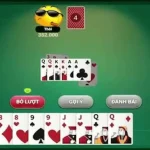


10 cards. No draw pile, no discard pile, no way back. Sunwin sam loc hands out every card at the start, and the round is decided by who can force everyone else to pass. That is the whole engine, and new players usually see only half of it.
What makes Sunwin sam loc different from other card games?
Nothing refills. Every card you will ever hold arrives in the opening deal.
The 10-card deal and the rule that ends a hand
2 to 5 players take 10 cards each from a 52-card deck:
- The deal hands every seat exactly 10 cards, face down and final.
- The seat holding the lowest card in play opens the first trick.
- Each player in turn beats the previous play or passes out of it.
- A pass is permanent for that trick, whatever card arrives later.
- When every other seat has passed, the last player to act leads.
- That new lead may use any legal shape, not the previous one.
- The first seat to empty all 10 cards takes the whole hand.
- Cards still in hand at that moment decide what each seat pays.
Why a declared sam changes the whole round
A player may declare sam before the first card leaves a hand, promising to play out all 10 cards unbeaten. Sunwin sam loc pays more when that lands and penalises the speaker when it does not.
Rooms also honour hands that win on sight:
- 4 twos in the opening hand, the strongest of them all
- A dragon straight running from 3 all the way to ace
- 5 pairs held in a single 10-card hand
- 10 cards sharing the same colour, in some rooms only
Which ranks and shapes define the game completely?
2 tables run Sunwin sam loc: the order of the cards and the list of legal shapes. Learn both and nothing at a table can surprise you.
How the card ranking runs from 3 up to the deuce
The card ranking starts at 3 and ends at 2, which is why players call the deuce the boss card. Suits break ties, from spades at the bottom to hearts at the top. A sam loc at Sunwin table applies that order to singles and to the top card of any other shape. The hand sorter on SUNWIN groups cards by that same order.
| Position | Ranks | Note |
| Bottom | 3, 4, 5, 6 | Safe to lead early |
| Middle | 7, 8, 9, 10, J | Decides most tricks |
| Top | Q, K, A, 2 | 2 sits above ace |
What counts as a legal play and what does not
5 shapes exist: single, pair, triple, 4 of a kind, and a straight of 3 or more consecutive ranks. A straight may cross suits freely, but it can never contain a 2. Any other combination is simply not a move, and the interface will refuse it. That restriction matters more than it looks, because it means a hand full of scattered high cards has fewer legal exits than a hand of low runs.
How does a trick actually get won at the table?
A trick in Sunwin sam loc is a small closed contest. Same shape, higher rank, or you are out of it.
Following the shape, beating the rank, or passing
Whoever leads sets the shape for that trick. A pair can only be answered by a higher pair, a straight of 4 only by a higher straight of the same length. Passing is permanent inside that trick, which is the rule new players break most often. Sitting out a trick to save a strong card is normal strategy on a sam loc at Sunwin table, though it hands the lead to somebody else.
What happens once every other player has passed
The last player to put cards down takes the lead and may open with any legal shape. That moment decides most hands.
- A fresh lead with a low single flushes out the deuces early
- A fresh lead with a long straight strips several seats at once
- Holding the lead twice in a row usually ends the hand
What can a chop do that nothing else can?
1 mechanic breaks the normal rules of shape and rank. The chop exists because a bare 2 would otherwise be unbeatable.
When 4 of a kind outranks the highest single card
A single 2 loses to 4 of a kind and to 3 consecutive pairs, even though neither matches its shape. A higher 4 of a kind then beats a lower one. This is the only place where shape matching is suspended, and it is why a player sits on 4 low cards for 6 tricks. A Sunwin sam loc hand holding 4 threes is never as weak as the ranking suggests. The chop option shows up as a separate button the moment a legal chop exists in your hand.
Why a leftover 2 costs more than a leftover 3
A stranded 2 carries an extra penalty, the instant win rules in reverse, and a hand ending with several deuces still unplayed is the most expensive way to lose a round. I have watched a strong hand collapse for exactly that reason: 2 deuces held back for a chop that never came.
The closing count works in tiers:
- A leftover 2 is charged at the heaviest rate in every room
- A seat that never played a single card pays an added fee
- Penalty sizes differ between rooms, so read the panel first
Is Sunwin sam loc worth learning from the mechanism up?
Read the engine once and the table stops feeling random. 10 cards, 13 ranks, 5 shapes, 1 chop rule and 1 penalty layer cover almost every argument you will ever have in a room. The gap worth knowing is that instant-win lists and penalty sizes differ between tables, so check the rules panel before your first hand rather than after it. Sunwin sam loc rewards the player who tracks which deuces have already gone, and TÀI XỈU SUNWIN players who come from dice games tend to underrate that counting habit for weeks.